

You book a room that looks reasonably priced. Night one feels fine. Night two still makes sense. By night five, the total often looks nothing like the rate you thought you agreed to.
This is not just “travel being expensive.” It is usually a mix of pricing rules, taxes, recurring fees, and behavior-based charges that quietly stack up as the stay gets longer. If you understand what triggers the jump, you can predict it and often reduce it.
The nightly rate is not the real price
Hotels market a base rate because it is the simplest number to compare. Your final bill is usually the base rate plus a set of add-ons that scale with each night.
The key issue is multiplication. A small daily add-on looks harmless for two nights, but after five nights it becomes a line item that feels like a second room charge.
Common per-night multipliers include:
- Resort or destination fees
- City occupancy taxes and tourism levies
- Service charges
- Parking
- “Facilities” or “amenity” fees
- Per-night extra guest charges
Even if the room rate never changes, the total can climb sharply because these are charged for every night of the stay.
Resort and Parking fees start to hurt right around day five

Resort fees are one of the most common reasons longer stays feel like a trap. They are usually quoted separately from the room rate, and they are often charged per night.
A $35 per night resort fee:
- 2 nights: $70
- 5 nights: $175
- 7 nights: $245
Now add tax on the fee, which many cities apply. In some destinations, the fee is also subject to occupancy tax. That is how a “$35 fee” becomes $40 to $45 on your final invoice.
Resort fees are typically justified as covering Wi-Fi, gym access, pool towels, in-room coffee, or local calls. The problem is not what they include. The problem is how quickly they compound on longer stays.
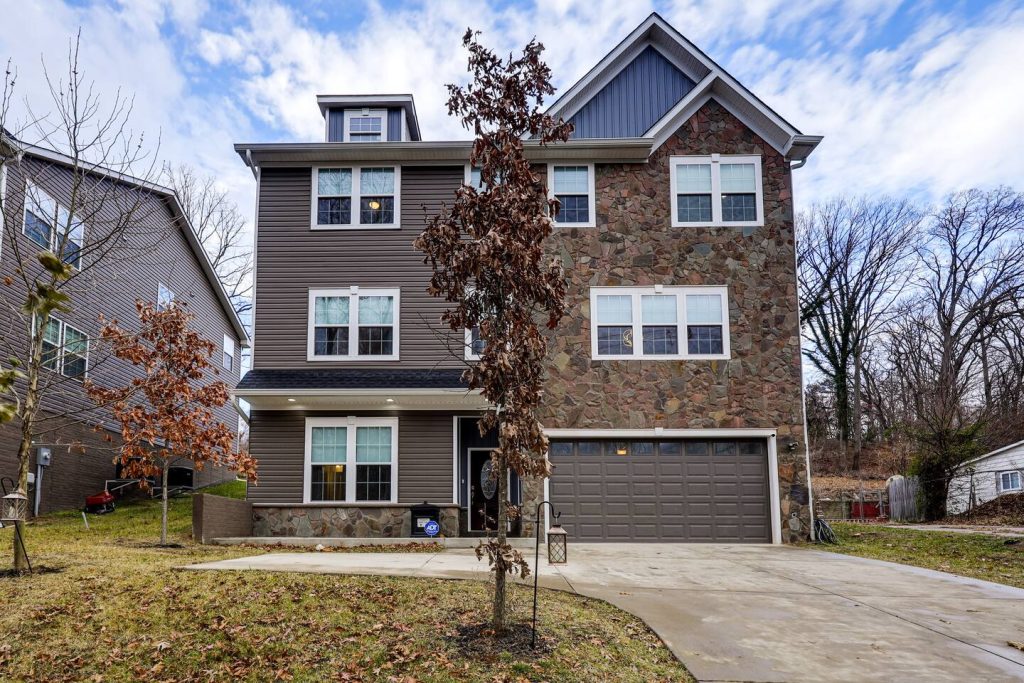
However, there are alternatives to traditional hotels that can help mitigate these unexpected costs. For example, consider exploring short-term rental options. These accommodations often provide more transparent pricing without hidden fees and can be found at locations like 18518 Old Triangle Rd in Triangle VA.
Taxes and local surcharges scale faster than you expect
Most travelers know hotel taxes exist. Fewer realize how many layers can apply and how they stack.
A typical structure can include:
- State or provincial hotel tax
- City occupancy tax
- Tourism improvement district fee
- Convention center or stadium surcharge
- Local sales tax on certain fees
Some of these apply to the room rate only. Others apply to the room rate plus fees. If you are in a high-tax city, the effective tax burden can push the real nightly cost up by 15% to 25% once you include fees.
That is why a five-night stay often crosses a psychological threshold. You move from “a few hundred” to “over a thousand” simply because the tax base got larger with every per-night add-on.
Dynamic pricing can re-rate your stay
Hotels increasingly use revenue management systems that adjust pricing based on demand signals. This affects you in a few ways.
1) You booked a flexible rate and the hotel recalculates add-ons
Some properties separate room revenue from “mandatory fees” that can change. Your base rate may be locked, but parking, breakfast packages, or service charges can change seasonally.
2) You extended your stay and the new nights are priced differently
A very common situation is extending your stay at the front desk:
- First 5 nights are under one price plan.
- Night 6 and 7 reprice based on current demand.
If the city is filling up for an event, the incremental nights can be dramatically higher. Your bill “explodes” because the last two nights are priced at peak rates while the first five were not.
In such scenarios, considering alternatives like Tiny Home Accommodation could provide more flexibility and potentially lower costs. For instance, options such as Tiny Home 4, Tiny Home 5, Tiny Home 6, or even Tiny Home 7 could serve as viable solutions for travelers seeking unique and affordable lodging alternatives during peak pricing periods.
3) Your booking spans a weekday/weekend switch
Many markets price weekends higher. Some business-heavy markets price weekdays higher. After five nights, you often include both patterns, plus a local event day.
If you only looked at the average nightly price, the peak nights can still shock you when you see the itemized breakdown.
Minimum-stay and length-of-stay rules can push you into expensive inventory
Hotels sometimes apply length-of-stay controls during high demand:
- A minimum stay (for example, 3 nights)
- A “closed to arrival” rule on peak days
- Restrictions on discounted room types
The result is that longer stays may force you into different rate categories. The cheapest rates might only apply to shorter stays, specific arrival days, or limited room types.
This can show up as:
- A higher rate starting on a specific night
- A forced room move, with the second room type priced higher
- Losing a promotional rate once you modify dates
Even if you do not notice it at booking, it can appear when you change anything mid-stay.
The deposit and authorization strategy makes totals look worse

Many “bill explosions” are partly perception, driven by how hotels handle deposits and authorizations.
Common practices:
- A security deposit per stay (often $50 to $200)
- An incidental hold per night (often $25 to $150 per night)
- Additional holds when you charge to the room
After five nights, a $75 per night incidental hold is $375 temporarily tied up. That is not always a final charge, but it affects your available credit and can trigger overdrafts or credit limit issues.
This is why travelers feel the bill is spiraling, especially if they are watching their card balance rather than the folio.
However, it’s worth considering alternative accommodation options like those offered by Quantico Short Term Rentals, which provide various options such as a spacious 4300 sq ft home with a game room, or even tiny homes for a unique experience. These rentals often come with more flexible booking terms compared to traditional hotels. Plus, services like an airport shuttle can further ease your travel experience.
Parking, breakfast, and “small” add-ons quietly dominate longer stays
A two-night stay can absorb optional spend without feeling painful. However, a five-night stay exposes how expensive “convenience” is when it repeats daily.
Typical repeat charges:
- Parking: $20 to $80 per night in many cities
- Breakfast: $15 to 45 per person per day, which could be managed better with short-term rental options that include breakfast
- Bottled water, snacks, minibar restocks
- Laundry and pressing
- In-room movies or premium Wi-Fi tiers
If you are traveling as a couple and paying for breakfast daily, the math gets serious fast. This is often the single biggest controllable category in long stays.
Housekeeping and service policies can change after several nights
Some hotels shift housekeeping frequency based on stay length, brand standards, or local regulations. That sounds like it should reduce cost, but it can do the opposite in subtle ways.
Examples:
- A property reduces complimentary housekeeping, then offers “on-demand” cleaning for a fee.
- Linen change policies lead guests to request extra towels or refreshes, which can carry service charges in some extended-stay formats.
- Longer stays trigger additional linen fees in certain apartment-style properties.
These are not universal. But when they exist, they tend to appear after several nights, not on a one-night stay.
Extended-stay discounts are real, but they often come with trade-offs
Many hotels offer weekly rates or “stay longer, save more” promotions. The issue is that these discounts are frequently applied only to the base rate, while taxes and fees remain unchanged.
So you may see:
- Room rate discounted by 10%
- Resort fee unchanged
- Parking unchanged
- Taxes still applied to the total taxable amount
This can make the discount look smaller than expected, especially in fee-heavy destinations.
Also watch the cancellation and change rules. Weekly rates are often:
- Non-refundable
- Charged upfront
- Not eligible for date changes without repricing
A longer stay locks you into the hotel’s pricing ecosystem. That reduces flexibility, which is often where the real financial risk sits.
In contrast, opting for a short-term rental could provide more flexibility and potentially lower costs by avoiding some of these common hotel fees.
How to predict the “5-night jump” before you book
You can usually forecast the final cost with a few checks.
1) Look for “Total price” and expand the tax and fee breakdown
On most booking sites, there is a small link that reveals:
- Taxes
- Property fees
- Service charges
If the property fee is per night, multiply it immediately. This is the most reliable way to avoid surprise totals.
2) Ask one specific question before confirming
If you are booking direct or calling the hotel, ask:
“What is the total per night including mandatory fees and taxes, and is parking mandatory or optional?”
You want the “all-in” nightly number. That exposes the multiplier effect.
3) Confirm how extensions are priced
If there is any chance you will extend, clarify:
- Whether added nights keep the same rate
- Whether you must rebook at the current rate
- Whether you need to change room types
This one detail often explains the sharp change after night five.
4) Understand incidentals
Ask the front desk:
- Deposit amount
- Per-night incidental hold amount
- How often holds refresh
- When released after checkout
This avoids the “my bill doubled” panic that is really authorization behavior.
Practical ways to keep a 5 to 7 night stay from getting out of hand
A longer stay is where small decisions matter. These are the highest-impact moves.
- Choose properties with low or no mandatory fees. The base rate can be higher and still be cheaper overall.
- Skip hotel breakfast if it is not included. Use a nearby cafe or grocery option. The savings multiply daily.
- Avoid parking charges when possible. Pick a hotel near transit or choose a property with included parking.
- Book the right rate type. If you need flexibility, avoid weekly rates that penalize changes.
- Track charges daily. Review your folio each night. Fixing errors on day two is easier than disputing them after checkout.
- Negotiate on longer stays. Some independent hotels will adjust parking, fees, or upgrades if you are staying a full week. Ask directly and be specific.
The real reason the bill “explodes” is simple math and weak disclosure
After five nights, you are no longer paying for a room. You are paying for a room plus a repeated bundle of daily charges that were easy to ignore at the start.
The solution is not complicated. Get the all-in nightly cost. Identify every per-night fee. Confirm how extensions are priced. Then decide whether the convenience is worth the multiplier.
When you do that, a five-night stay stops being a surprise and starts being a number you can control.
FAQs (Frequently Asked Questions)
Why does the total hotel bill often become much higher than the initial nightly rate after several nights?
The initial nightly rate is usually a base rate that excludes various add-ons such as resort fees, city occupancy taxes, service charges, parking, and other per-night fees. These costs multiply with each night of your stay, causing the total bill to rise significantly over time.
What are resort fees and how do they impact longer hotel stays?
Resort fees are mandatory daily charges separate from the room rate, covering amenities like Wi-Fi, gym access, or pool towels. For longer stays, these fees compound quickly—for example, a $35 per night fee becomes $175 over five nights—often increasing further due to taxes applied on top of the fee.
How do taxes and local surcharges affect hotel pricing for extended stays?
Multiple layers of taxes and surcharges can apply to both the room rate and additional fees. These may include state hotel tax, city occupancy tax, tourism district fees, and local sales taxes. When combined with per-night add-ons, these can increase the effective nightly cost by 15% to 25%, making longer stays unexpectedly expensive.
What role does dynamic pricing play in hotel rates during extended stays?
Hotels use revenue management systems that adjust prices based on demand. This means that if you extend your stay or book flexible rates, additional nights might be priced higher due to current demand or special events. Also, weekend or weekday rate differences can cause price jumps during multi-night bookings.
What are minimum-stay and length-of-stay rules in hotels and how can they affect pricing?
During high-demand periods, hotels may impose minimum stay requirements (e.g., at least three nights) or restrict arrivals on peak days. They may also limit discounted room availability. These rules can push guests into more expensive inventory options and increase overall stay costs.
Are there alternatives to traditional hotels that help avoid hidden fees and high costs for longer stays?
Yes, short-term rentals such as those offered by Quantico Short Term Rentals provide more transparent pricing without hidden daily fees like resort charges. Options include unique accommodations like tiny homes which offer flexibility and potentially lower costs during peak pricing periods.